
My friend attempted s*****e. What do I do?
For Immediate Help: Call 988
Dialing 988 will connect callers directly to the National Suicide Prevention Lifeline.
Access the Crisis Text Line by texting “HOME” to 741741.

After 10+ years of counseling clients who have attempted to end their own lives, I recently shared a few insights with a client who’s friend needed support.
Thankfully, my client’s friend was already in therapy, and my client was simply wondering how she could be a better friend to someone who was struggling. Below are golden nuggets from our conversation.
I will use the words “intent” and “attempt” in the place of the phrases “suicidal intent” or “suicide attempt.” This is not because I am afraid to use the word “suicide,” but I hope these terms will make this material more digestable for people who are less familiar with the topic.
Four of the most helpful conversations I have with clients struggling with a history of intent or attempts are:
Guilt vs Shame
Locus of Control
Talking About the Talking
Altruism is a Theory
Guilt vs Shame
Listen to Guilt.

Reject Shame.
I’ve developed a theory from the client’s I’ve worked with…
“Most people with intent to end their own lives share one thing in common: They care about the whole world. They have huge hearts full of compassion for everyone and everything around them, making them especially vulnerable to feelings of hurt, disappointment, grief, and depression.”
My clients in this category have often come to a place in their lives where they can no longer hold space for their own emotions. They are so burdened by the sufferings they’ve witnessed and have tried their best to improve the world around them. Usually, they feel like they have somehow failed to make their world a better place. They usually feel the best thing they can do for others is to shrink themselves, their emotions, or their needs, in order to make room for everyone else. I find these clients to be incredibly generous with their time and energy, sometimes to a fault, many of them hardworking or overworking themselves to meet others’ expectations or their own expectations of themselves. However, when left unchecked, this pattern of thinking can unfortunately open the door to intent, or worse, an attempt to end their own life.

It can be helpful for the person with intent to understand that there are subtle differences between two very common, yet difficult emotions: guilt and shame. Guilt and shame are terms used interchangeably in everyday conversation, but there is a fundamental difference between the two that can radically change a person’s ability to manage their emotional turmoil. Below are my comparisons.
Guilt: It hurts, but it helps.
Guilt feels just as bad a shame when we experience it. It is that feeling that points the finger at whatever bad choices we’ve made and tells us to never exhibit those behaviors again.
The benefit of guilt is that we can learn from it. If we pause and listen to what this helpful emotion is trying to teach us, we will hear solutions and positive alternatives for our previously poor decisions. We will learn from our mistakes and grow.
Example: Guilt might say to you, “Let’s not do that again. That didn’t feel good. Instead, let’s try this other option next time…”
The best thing you can do is listen to guilt and learn from it.
Shame: It hurts too, but it will never help.
When we experience shame it feels bad overall, just like guilt does… However, shame tends to point the finger at what we did wrong, and then takes things a step further by pointing the finger at US as the root of the problem.
Shame attacks your behavior AND your identity.
Shame does not provide any real solutions to a problem. Instead, it will blame you for being incapable, incompetent, unattractive, unwanted… whatever it can say to remove responsibility from everything and everyone except you.
Shame will even convince you that you are noble for feeling this way; that you are taking the “high road.” It may tell you that you are being the “bigger person” or that you somehow “deserve” to carry some burden on your shoulders. However, shame will never tell you how to handle that extra weight or ultimately resolve it.
The best thing you can do is recognize shame for what it is, and totally reject it altogether.
Rejecting shame may look like saying something out loud such as, “No, I do not believe that about myself.” It may be an internal thought, such as imagining a wall between you and the shameful thought or memory. It may look like replacing shameful thoughts with better ones. If shame says, “Everyone else can do it except me,” then try rejecting that shameful thought with, “I can do my best and that is enough.”
I said it before, but it is worth saying again…
“Listen to Guilt. Reject Shame.”
2. Locus of Control
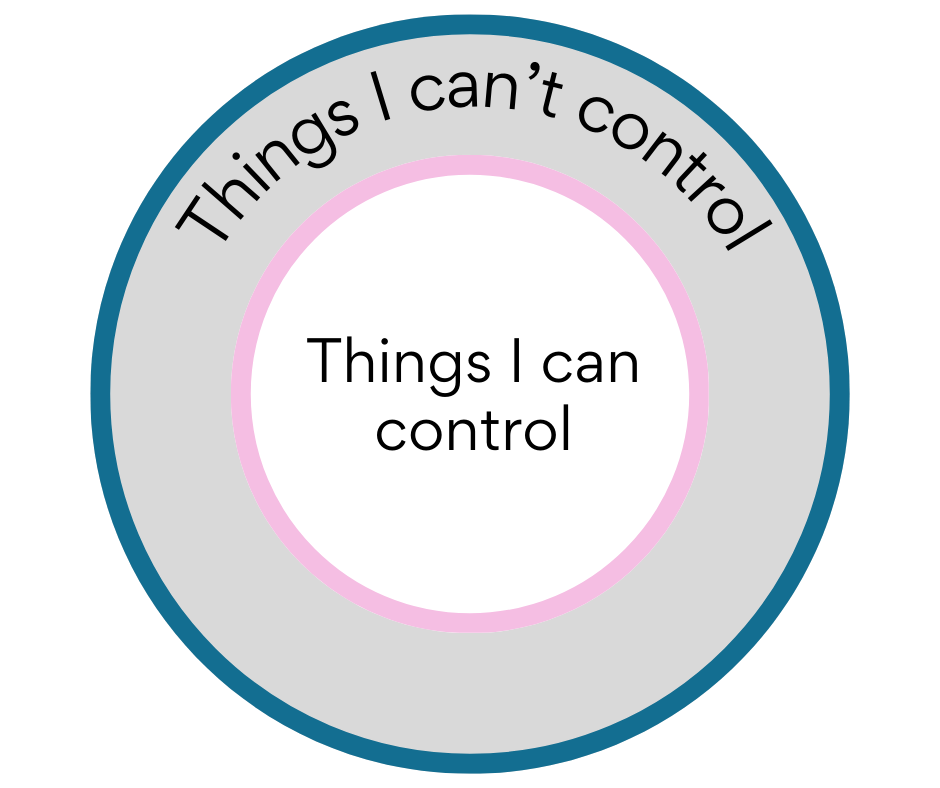
Simply draw a circle on a piece of paper to create your own Locus of Control Worksheet.
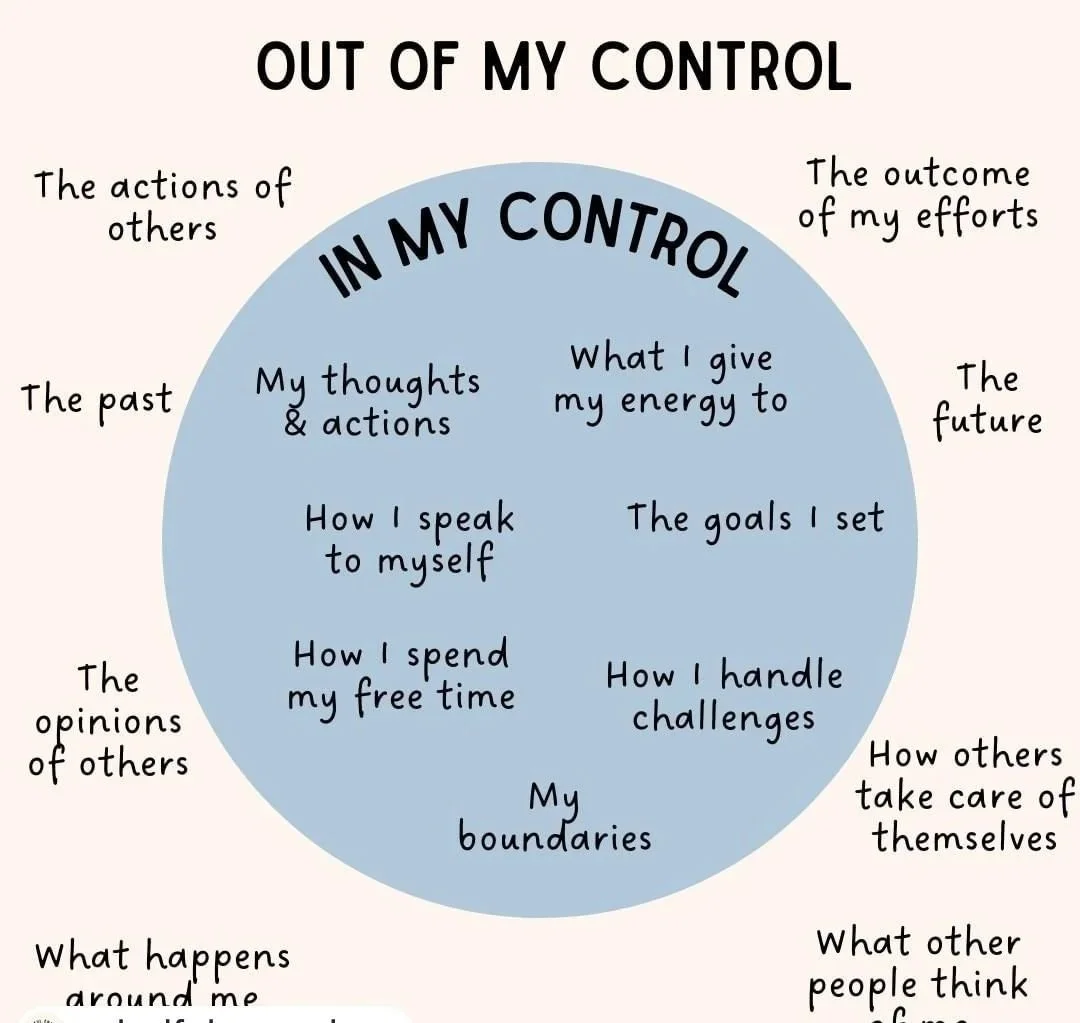
As I mentioned before, having a huge heart that carries the weight of the world has a way of turning people into a beautifully complex, yet deeply troubled soul. This is due to the universal fact that zero percent of human beings have complete control over every aspect of the entire world.
To help clients understand their locus of control, I start by asking the client to draw a large circle on a sheet of paper. Next, I instruct them to write a list of things they do not have control over on the outside of the circle. Then, I have them write down all the things they do have control of inside the circle. If their lists are too vague, I may ask follow up questions about their specific situation (i.e. “When it comes to depression, what aspects of that experience are outside your control?… What parts about depression are still within your control?”).
After their lists are done, I ask them to share any new insights they have gained from completing this simple exercise. I use the Locus of Control worksheet to help clients become more aware of overlooked, yet meaningful aspects of life. Clients see they actually do have control over meaningful things, even while none of us will have control over everything. Simply seeing both dichotomies side by side on one sheet of paper can be therapeutic. It is an act of accepting things as they are, and embracing the wonderful parts of life we can appreciate, even when there is pain in it.
3. Talking About the Talking
“Talking about the talking” is a phrase I picked up during graduate school. It has always been helpful when trying to discuss difficult or taboo topics in therapy.
For those therapy nerds out there who care: An AI overview from Google says the phrase is attributed to the work of “The Palo Alto Group.., Strategic Family Therapy… and Jay Haley, who was heavily influenced by Gregory Bateson's theory of metacommunication. It refers to the idea that communication doesn't just consist of the content of what is said, but also includes a "meta-level" of unspoken messages about the relationship itself.”

Talking about the talking is an important way to support someone emotionally. Its a simple way to set the stage for a potentially challenging conversation. Here is an example of how I might “talk about the talking” during a therapy session:
Therapist: “You mentioned a particularly difficult experience you wanted to talk more about in our sessions… Before we dive deeper into that conversation, I just wanted to ‘talk about the talking’ first... Could you tell me more about what it has been like in the past trying to talk about that experience?… Have you told anyone about it before?… If you have, what did it feel like to tell them about it?… How did they respond?… Was their response what you expected or not?… What are you hoping to gain from talking about the difficult experience now?”
I may not ask all of those questions. It just depends on how the conversation flows and where my therapeutic curiosity leads me. The point is, all of the questions above will have unique answers depending on the specific individual you are speaking to. Each question simply sets the stage for deeper, more challenging conversation around the topic. Your genuine curiosity about your friend’s history of trying to share difficult emotions or experiences will demonstrate that you can hold emotional space for who your friend is at this stage in their life. In a way, by talking about the talking, you are sending this very important message:
“It is okay if you don’t want to dive into overwhelming trauma history right now. Most people don’t. Most people need to feel emotionally safe and well cared for before they can open up like that. It is wise of you to wait until you feel that way before sharing with me.”
4. Altruism is a Theory

First, let’s define Altruism:
n. selfless concern for the well-being of others, without care for one's own interests; unselfishness.
So, in theory, altruism would be the character trait that allows a person to run into a burning building, without regard for their own life, in order to save their pet cat from the flames, or their little sister from the unyielding heat and smoke.
Sounds good and honorable, right? It sounds like if everyone operated with more altruism, the world would be a much better, happier place.
There’s just one problem.
Few people realize that altruism is often confused with another similar psychological theory called “pure altruism.”
Pure altruism is the act of helping others based solely on a selfless concern for their welfare, with ZERO expectation of personal gain, reward, or benefit. This means that all self-interested motives, both conscious and subconscious, are completely absent.
Altruism, or general unselfishness, is truly an honorable virtue. However, PURE altruism may not actually exist. It is just a theory, and a slippery slope that plagues too many people’s interpersonal interactions. Here’s an example of what I mean. Let’s take a look at a hypothetical couple, who we will call Sally and Harry…

Sally doesn’t realize it, but she believes in the the theory of altrusim. Sally believes pure altruism exists, and that she can love someone without selfish motives or selfish intent. Sally and Harry’s love story went like this:
Sally and Harry fall in love.
Harry asks Sally to move in together.
Sally feels uncertain whether this is the best decision, because Sally wants to get married before moving in with someone. Also, Harry’s income is significantly lower than Sally’s, and Harry does not want to marry or combine incomes until after he meets his financial and career goals.
Sally decides to move in with Harry, because Sally loves Harry, doesn’t want to lose him, or slow down a good thing, and she is hopeful everything else will work itself out over time.
Harry feels the same way and is hopeful they will build a beautiful life together. However, after the move, Harry struggles to increase his income, and over time begins to feel like a financial burden to Sally, rather than an equal partner in their relationship.
Sally tries to reassure Harry that she loves him with no expectations or conditions, and that she can love him beyond his financial struggles. She believes in him and says she is willing to support him even if he never achieves his financial and career goals.
Sally’s support is appreciated by Harry, but Harry soon falls into a depression due to his own self-doubt and pity. His feelings are only amplified by Sally’s unwavering financial support and love, spiraling Harry further and further into a pit of despair.
After 4 years of living together, Sally begins to feel unloved by Harry, because his actions do not seem to match his words. He says he loves her, but he has not proposed and she fears he may never commit to her in marriage due to his ongoing financial and emotional difficulties. When Sally tries to talk to Harry about this, Harry seems to distance himself more from Sally.
Eventually, Sally decides to leave Harry. A part of her still loves him, but another part of her is exhausted and unsure how much longer she can single-handedly carry the financial and emotional burden of this relationship. She realizes she wants something that feels more mutual, and can’t understand why someone as wonderful as Harry would not choose to love her better, even when he is going through difficult times. Sally thinks to herself,
“If I were going through difficulties, I would still sacrifice for others to make sure they feel loved! Why doesn’t anyone seem to do the same for me?”
Where did Harry and Sally go wrong? Perhaps Sally could realize her world is clouded by the theory of pure altruism. If she did, she would approach new and current relationships with realistic expectations on herself and others. If Sally had done this with Harry, she would have been honest with herself about her desire to be married before moving in with him, and she would have been more assertive about her need for commitment and emotional safety within a long-term relationship. Instead, in the name of “love” from a purely altruistic standpoint, Sally insisted upon ignoring her own boundaries in hopes it would make room for Harry’s needs and eventually solve their problems.
The theory of pure altruism is just that- a theory. It is not a foundational principle upon which relationships should be built. Integrity, dignity, mutual respect, trust and love are wonderful foundational principles for relationships. Pure altruism sounds like an honorable trait or quality, but it does not help us to meet our basic human needs, many of which we can see below in Maslow’s heirarchy of needs, circa 1943.
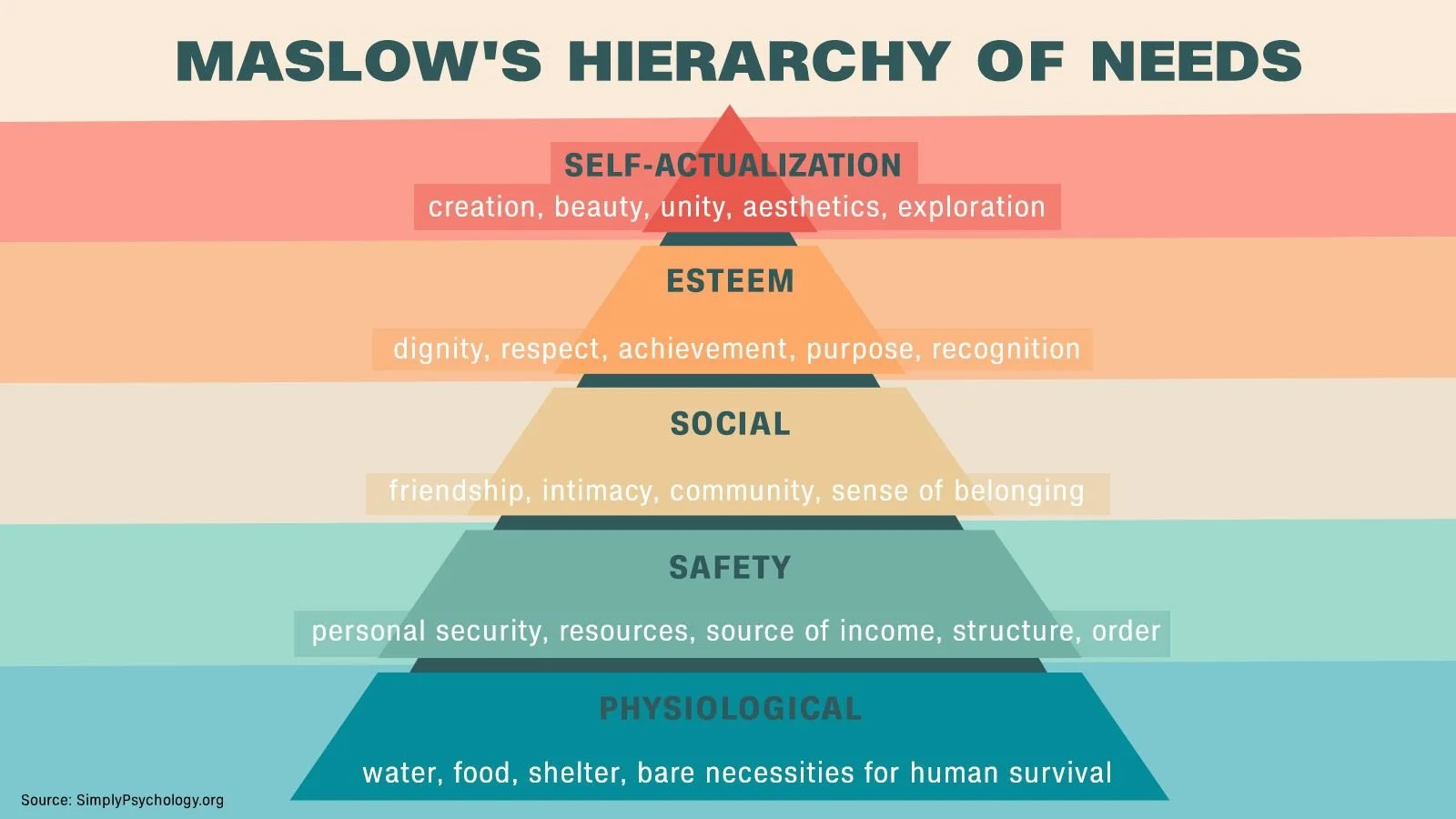
Not all of our needs are physiological. Those are simply the foundation of survival. To feel fully alive, humans also need to achieve, live with purpose, create, connect, belong, and experience the many complex and beautiful parts of life that make us whole.
Being selfless and performing acts of altruism can help meet these needs, but the idea of pure altruism suggests those needs don’t exist at all. It assumes we can set aside our individual desires and act only for the benefit of someone or something outside ourselves—without even a subconscious motivation behind it.
What does altruism have to do with intent/attempts?
Essentially, many clients I’ve spoken to have a purely altruistic view of their relationships, even if they don’t know what pure altruism is.
Once we start digging into the details of their relational dynamics, and I begin to educate the client about what altruism is, they often recognize themselves in what I’m describing, that they were trying to “love unconditionally” or “without expecting anything in return,” and as a result, they often do not communicate their needs, hopes, desires, wants, or expectations to others- then wonder why others don’t often reciprocate their love, care, attention to detail, etc.

We can talk about love languages all day long, but if the other person never hears you say,
“Hey, I just realized I feel this way and I think I need (this, that or the other)…”
then it is realistic for that person to disappoint you more often, simply because they can not read your mind and are unaware of your boundaries. Until you drop your purely altruistic worldview, you may not even be aware you have these boundaries and will experience the world as constantly crossing your boundaries, even though you do your best to respect others’ boundaries.
When someone does ALL of their relationships from a purely altruistic worldview, (sometimes even feeling like they can’t ask God for things) whether they are aware of it or not, it can lead to depression and eventually shame. Thoughts like, “Is this my fault? Am I the problem?” can eventually spiral into intent and/or attempts to end one’s own life.
If you or someone you know is dealing with suicidal ideations, or is in need of immediate assistance, do not hesitate to reach out for support.
For Immediate Help: Call 988
Dialing 988 will connect callers directly to the National Suicide Prevention Lifeline.
Access the Crisis Text Line by texting “HOME” to 741741.
I hope these four discussion points help you better understand and support someone struggling with feelings of intent or a history of attempts. In review, here they are again:
Guilt vs Shame
Locus of Control
Talking About the Talking
Altruism is a Theory
If you would like to reach out and talk more about how to help a friend, or how to improve these areas in your own life, I would be happy to speak with you.